Friday, May 13, 2016

Wednesday, April 13, 2016
The Fear and Benefits of Doubt
 Dennis Prager, author, columnist, and radio show host, said on a recent show that a national atheist
 group asked him to come for a debate about the existence of God. Prager, a religious Jew, asked the audience of atheists if they ever doubt their atheism. Not a single person raised their hand. Prager remarked that when he asks religious audiences if they ever doubt their faith, nearly ever hand goes up.
His point to the audience was this: if you are talking to someone who believes something and they claim to never have doubted it, you would question whether they are just brainwashed. This, indeed, is an argument sometimes used by atheists towards believers. Prager was pointing out the oddity that many atheists, at least in that setting, don't question themselves. However, I want to point out that, as Prager implied, doubting what you believe is a good sign.
For those who are believers, we often fear doubting our faith for several reasons.

1. We think it would offend God.
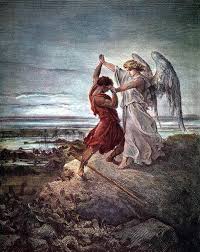
This is completely off-base. The name "Israel" actually means "one who struggles (fights) with God." The name was first given to a guy who wrestled, literally, with God (or an angel. It's hard to tell). Abraham argues with God about the destruction of Sodom. Thomas, the disciple who doubted Jesus' resurrection was welcomed by Jesus and was still one of the disciples to receive the Great Commission. Isn't it a little pompous on our part to think God would be offended by our little questions?2. We're afraid we might not have an answer to our doubt.
When I first began to ask some tough questions of my faith in my late teens, I started looking for answers. Guess what? I discovered that people had been answering the same questions for thousands of years. I found tons and tons of writing on these subjects. The fancy word for it is: Apologetics. Trust me, you're not the first person to ever ask whatever question you're asking.The key is to actually look for the answers. I know someone who is very close to me who has so many questions about God and Christianity, but...he never looks for the answers. I've given him material to read, attempted to answer his questions, and more, but for the many years I've known him, he's never read the material and never pursues answers. What good is that? It makes me think he's hiding behind the questions for more reasons than actual questions.
The Good News
Here's the good news: if you're doubting your faith, that means you're growing. We take a lot of
things for granted when we are young (either physically or young in faith, depending on when it started for you), but as you become more intelligent and mature, you place your assumptions under scrutiny. That's mature.
It's a lot like marrying someone. You'll be swept up in the emotions of it all for sure, but you also, if you're mature, have to ask some tough questions: do we have what it takes to make this relationship last a lifetime? How does he/she treat his parents? Will he treat me this way eventually? Can I deal with the way he spends money? Does he/she want children? One should face these questions in addition to the "do I feel in love?" questions.
So, don't be afraid of the questions. Ask them. Know that your Father is with you in them, that He will comfort and guide you, even when it feels despairing. Trust that He's big enough to handle your questions.
Finally, you may be surprised by what happens when you trust Him with your doubts. When I began facing some tough questions in college about my faith, surprisingly, it wasn't the answers that made me stronger (although they certainly helped). Instead, I found myself clinging to my Father so much more in a way that built more tenderness between us that I hadn't known before.
P.S. if you're looking for some sites that specialize in dealing with tough issues and faith, check out: Cross-Examined. There are certainly more, but this site may get you started.
Wednesday, April 6, 2016
Chasing a spiritual high
I've had some pretty cool "God experiences" in my life. It's tempting to always want to have them happen again. In fact, sometimes you think you should be living the spiritual-high feeling all the time. I've found that this isn't real life spiritually or in any other human relationship for that matter. The following is a blog post by a guy I really respect named Wayne Jacobsen. I hope it gives you a new perspective like it did for me.

It’s
an amazing moment when a butterfly hatches from her chrysalis,
flexes her wings until they dry, and then takes flight discovering what it
is like to be a butterfly instead of a caterpillar. We get to
enjoy this little miracle in Sara’s garden almost every year. But it never
happens at the same place twice.
Sometime
next month thousands of people are set to gather in a stadium in Southern
California on the 110th Anniversary of the beginning of the Azusa
Street Revival in hopes of gathering 100,000 people
to call down a great, last-day revival. This is only the most
recent of numerous attempts to get God to act, all driven by “words from the
Lord” and interpretations of dreams in hopes that some day “stadium
Christianity” will take over the world where gatherings of Christians will
replace sports contests in our largest stadiums.
Everywhere
I’ve gone on this trip I’ve been asked what I make of all this and if I’m
involved. I’m not. Honestly, I don’t find the prospect very engaging for
a number of reasons. Jesus seemed to want us to make prayer a private matter
not a public display. He seemed to indicate that praying with 100,000
people has no more power than two or three agreeing in his name. I also
find it strange that the 110th (really, not 100th?) anniversary of
a past moment of God’s visitation would be significant to God in any way.
I also find a large crowd of people trying to “call down” revival seems
more reminiscent of Baal’s prophets trying to call down their false god, rather
than Elijah’s simple proclamation that God simply make himself known as the
one, true God. (I Kings 18)

Jesus
never indicated that praying in large gatherings would usher in a world-wide
revival. He said that when we were loved enough by him to love others in the
same way the whole world would come to know who he is. That’s where I want to
invest my time and attention.
Thus
I am not looking for some great revival as just another “event” that will
have it’s day in the sun then fade away like all the others. In fact, I see
revival happening all over the world right now. I see spiritual hunger
emerging and tens of thousands of people that I know, opening to God in a fresh
way, learning to live in his love and share it with others freely.
Something amazing is already happening that is not controlled or promoted
by humanity and yet is filled with the richness of the Living Jesus. I find
that much more engaging. So, no, I’m not involved nor do I have any hope that
this event just won’t be another in a long line of prayer meetings, summits,
and rallies that smell more of human effort than the fresh wind of the Spirit.
Of
course, I could be wrong about this. God might actually be leading them
and something significant will happen that day. I’ll be the first to apologize
if I’m wrong, but I’ve never seen this kind of thing fulfill the promises of
its organizers. It may feel spectacular while people are there, but they will
go back to their homes and wonder what it was all about. This is not the way
God seems to work. And by that I am not casting aspersions on the hopes
or motives of those who feel inclined to plan or attend these events. For the
most part I know them to be well-intentioned people who sincerely want God
to do something in our day. But I am not hopeful that this is
the means to the end that they want, or even that the revival they are
looking for is very different from what he is already doing in the world to
draw people to himself without named celebrities on the stage.

I
don’t chase these things around any more than I hang out beside a spent
chrysalis hoping another butterfly will emerge. Life happened there once and it
will not do so again. When another butterfly hatches it will come from another
place, at another time.
Maybe
our traditions are simply hanging around old places where God worked once,
hoping he will work there again rather than following him to see what he is
doing now. How much energy and effort is wasted by those who hope God will do
something he did once again and again in the same way and come away
disappointed and disillusioned when their efforts bear little fruit?
Maybe
God has moved on and life is happening somewhere else. Because, as Jesus said,
“My Father is always working.”
Maybe
we’re just looking in the wrong place.
Monday, March 7, 2016
Anger Management: practical solutions
This is worth your 5 minutes whether you have an anger problem or you are in a relationship with someone who does.
Tuesday, February 23, 2016
Horror movies and being a Christ-follower: How do they go together?
With a brother several years older than myself, I started watching horror movies when I was quite young. Friday the 13th, Nightmare on Elm Street, Texas Chainsaw Massacre; you name it. It surprised me that, even when I got older, disturbing images from these films still were very vivid in my mind and sometimes came to me at moments when they were less than useful!
I simply decided that I didn't want this kind of stuff in my brain. So at some point in my 20s, I stopped watching horror films and haven't looked back.
My motive was largely practical. I don't think I fully processed through the spiritual implications of watching these movies. For that reason, I thought it would be good to quote those who have. Below is an article I found online that does a good job at looking at the issues that a Christian faces concerning the implications of watching horror films.
I do not have an agenda here. I picked this one particularly because it doesn't come down fully on the "don't watch them" or the "who cares?" side. That I believe is the freedom of the believer in Christ. We each interact with our Savior individually and therefore can seek him for clarity that may or may not apply to others.
Here is the article from 412teens.org:
Should a Christian Watch Scary Movies/Horror Films?
 Over the last hundred years, movies have moved from being a
curious and magical novelty to something so ingrained in mainstream culture that to have never seen a movie is similar to having never ridden in a car or touched a computer. And over that period of time, movies have become not just a tool for mindless entertainment, but also a tool for spreading messages—both positive and negative. Healthy and unhealthy. Storytelling is a
powerful tool for things deeper than just "entertainment" and often
reflects some grain of truth from Romans 1:18-21 about the hearts of men.
Over the last hundred years, movies have moved from being a
curious and magical novelty to something so ingrained in mainstream culture that to have never seen a movie is similar to having never ridden in a car or touched a computer. And over that period of time, movies have become not just a tool for mindless entertainment, but also a tool for spreading messages—both positive and negative. Healthy and unhealthy. Storytelling is a
powerful tool for things deeper than just "entertainment" and often
reflects some grain of truth from Romans 1:18-21 about the hearts of men.

 they don't need any additional
stimulant in that area. If horror and scary movies will affect you in a way
that makes you go against your morals and conscience or makes it more difficult
to rest in God's secure embrace or even leads you to search for a way to
justify watching them, then STEP AWAY.
they don't need any additional
stimulant in that area. If horror and scary movies will affect you in a way
that makes you go against your morals and conscience or makes it more difficult
to rest in God's secure embrace or even leads you to search for a way to
justify watching them, then STEP AWAY.
I simply decided that I didn't want this kind of stuff in my brain. So at some point in my 20s, I stopped watching horror films and haven't looked back.
My motive was largely practical. I don't think I fully processed through the spiritual implications of watching these movies. For that reason, I thought it would be good to quote those who have. Below is an article I found online that does a good job at looking at the issues that a Christian faces concerning the implications of watching horror films.
I do not have an agenda here. I picked this one particularly because it doesn't come down fully on the "don't watch them" or the "who cares?" side. That I believe is the freedom of the believer in Christ. We each interact with our Savior individually and therefore can seek him for clarity that may or may not apply to others.
Here is the article from 412teens.org:
Should a Christian Watch Scary Movies/Horror Films?
Over the last hundred years, movies have moved from being a
curious and magical novelty to something so ingrained in mainstream culture that to have never seen a movie is similar to having never ridden in a car or touched a computer. And over that period of time, movies have become not just a tool for mindless entertainment, but also a tool for spreading messages—both positive and negative. Healthy and unhealthy. Storytelling is a
powerful tool for things deeper than just "entertainment" and often
reflects some grain of truth from Romans 1:18-21 about the hearts of men.
The
Point of Horror
A horror movie is, by definition, a story that produces
"an intense feeling of fear, shock, or disgust." Scary stories that
would fall into the horror category have always been around, tailored to their
cultures of origin. Many classical fairy tales (which are just as brutal, if
not more so, than a lot of today's "horror") were told to teach
lessons to children, or to discourage wrongdoing.
But with people becoming more and more desensitized,
something that used to be considered a nightmares standard might now be used as
a cheap thrill that's tame enough for a TV commercial. As such, it is harder to
shock an audience that has grown up around stylized carnage and a less solid
standard of good and evil, right and wrong.
Horror tries to shock people in a variety of ways:
gratuitous gore, psychological terrors (What's around the corner? Is there actually a
monster in the house?), spiritual warfare, or even just jump-out-of-your-seat
scenes that make the audience hit the ceiling from an adrenaline rush of fear.
Often the shock is there for the shock itself—not for any grand, overarching
point.
That's not to say that you can't learn
anything from a horror movie, but you should still exercise
discernment when watching or reading or playing anything.
Should
Christians watch horror movies?

As Christians, we should be extremely aware that "our
struggle is not against flesh and blood, but against the rulers, against the
powers, against the world forces of this darkness, against the spiritual forces
of wickedness in the heavenly places" (Ephesians 6:12). We know that very real demons
are out to "steal, kill and destroy" (John 10:10). Satan and his servants are trying
to trip us up at any chance they get; spiritual warfare is not a subject to be
taken lightly.
Regardless of what type of decision we're making—whether it
be about life or media choices—we must always listen to what the Holy Spirit is
saying to us through our conscience. Is He saying, "No, don't watch
that"? Then don't! Are you not sure if the Holy Spirit is saying no? Then
it would be safer to avoid whatever it is you're wondering about, just to be on
the safe side—at least until you have a clearer answer. Nothing is worth
stifling God's voice (1 Thessalonians 5:19; Ephesians 4:30)!
Secondly, have your parents told you no? Then no matter of
what movies you think are okay, you are to respect and obey their decision (Ephesians 6:1-3).
How
can I have discernment about horror movies?
As we grow in our faith, we should become increasingly more
sensitive to sin and evil. We are supposed to be different, standing out as
beacons of light in a dark, sin-filled world (1 Thessalonians 2:12). We should keep our
minds on "whatever is true, whatever is honorable, whatever is right,
whatever is pure, whatever is lovely, whatever is of good repute" (Philippians 4:8).
That said, there are some who can still find the things
listed in Philippians 4:8 in
horror/scary films. There are movies that fall under the category of
"horror" that show more truth and ask deeper questions than one might
expect. Some horror films even come from Christian filmmakers, either using
their unique view on the world to reach a different audience that may not
otherwise be exposed to God's Truth or to show the reality of struggles that a
lot of other Christian media won't touch. We all know that life is not always a
happy and uplifting romantic comedy; sometimes darker stories are needed to
portray a certain message.
In
the end, you know yourself best.
For some people, they need to avoid superfluous scares
because they struggle with fear enough as is;

If you decide to give these types of films a shot, check
your motives, check your heart, and if possible, do your research. Be aware
that very few review websites will ever be completely accurate, and all are
biased, even if slightly, one way or the other. Know your own limitations. Know
your weaknesses. Ask God for guidance. Perhaps you are one of those who will
find horror movies to your personal edification.
"Test yourselves to see if you are in the faith;
examine yourselves! Or do you not recognize this about yourselves, that Jesus
Christ is in you—unless indeed you fail the test?" —2 Corinthians 13:5
Monday, February 22, 2016
Men can't control themselves: True?
 The author of The Prisoner of Zenda wrote a prequel called The Heart of Princess Osra. Basically, every chapter follows the life of a different man who falls in love with Princess Osra. Every one of them either must leave the country or die because her beauty has driven them mad with love. In one case a man, who has disguised himself as a soldier to get close to her, ultimately decides to kill the princess so that honest men will no longer suffer because of her beauty. He, of course, can’t do it, but instead dies to protect the Princess. After this Osra asks the King to make her a nun so “that she might trouble honest men no more.”
This is an entertaining story to read, but is a pack of lies for girls. Let me address five myths:
Myth #1: Men can’t control themselves.
Bull. There are men who don’t control themselves, but that’s true of anyone, right? What you wear, or how you look, doesn’t make a guy do anything. In the Christian world we talk about girls causing guys “to stumble” by wearing clothing that might cause them to lust. Girls don’t cause this. This is important because lots of girls feel ashamed of themselves when they have been violated (physically or verbally or by text etc.) by a guy. There is part of them that feels like they caused it or “asked” for it. I’d like to drive 100mph on the highway because it would be a thrill, but I choose not to do it. But, if I did, and got a ticket, I can’t say “movies with chase scenes” made me do it. If a guy blamed you for a violation of his, he is lying.
There is another side this coin: how you look does have impact. Here's a post where I addressed this.
Friday, February 5, 2016
Are you ever surprised by your anger or anxiety?
 Are you ever surpsied by yourself? As in: not in a good way.
Does anger flare up at things that other people don't necessarily get angry about?
Does anxiety incapacitate you over things that others are able to handle normally?
Recently I listened to a psychologist, Dr. Steven Marmer, who had some interesting insights about these. Here's what he suggested.
Nearly everyone of us has been hurt, betrayed, or slighted in life. It's just the way life is. Whether you've had terrible parents, wonderful parents, or no parents, they probably have hurt you. Friends hurt us, relatives hurt us, strangers hurt us, and the list could go on.
We're able to move past most of these issues, but some hurts run deep and affect us repeatedly throughout life whether we realize it or not.
Dr. Marmer says that many of us do what is called "transferrence." This means that when someone does something to us that is even remotely like what a painful experience was like, we tend to transfer the same feelings there. For example, if you had a critical dad, you may find yourself receiving any criticism, no matter how well-intended, the same way you received your dad's criticism. In essence, you transfer those past feelings to the present situation even when it's not warranted.
Marmer goes on to say that, unconsciously, we exert a "force multiplier." Continuing the example above, let's say a coach corrects your form when shooting lay-ups. The coach was just being helpful and wants to see you succeed, but without realizing it, your brain multiplies the force and interprets it as something you got from your critical dad. So, correction about your lay-up form now has turned into you feeling worthless and like a failure.
So, what do you do? Go back to your past.

Spend time with God, yourself, or someone you trust and try to figure out if there is something in the past that is causing your strong reactions in the present. Then begin to work through it. Talk it out, face the anger, hurt, fear, disappointment, or pain surrounding that past situation. Ask God, in time, to help you forgive those who wronged you. And ask Him to help you see how your life now is being affected by what happened then. Then ask Him to help you find a new way to live and react in new, healthy ways.
You'll need to learn to see those transferrence situations and work to stop multiplying the force. Also, don't avoid getting counseling. It's not just for "screw ups." It's for normal people who want to see change and admit that they need help to do it.
Finally, remember that the Lord is the Lord of the future, the present, AND the past. Go with him back into those painful memories and let Him begin the healing process for you.
Subscribe to:
Posts (Atom)