Showing posts with label movies. Show all posts

Tuesday, February 21, 2017

Horror Movies and being a Christ-follower: Do they go together?

With a brother several years older than myself, I started watching horror movies when I was quite young.  Friday the 13th, Nightmare on Elm Street, Texas Chainsaw Massacre; you name it.  It surprised me that, even when I got older, disturbing images from these films still were very vivid in my mind and sometimes came to me at moments when they were less than useful!

I simply decided that I didn't want this kind of stuff in my brain.  So at some point in my 20s, I stopped watching horror films and haven't looked back.

My motive was largely practical.  I don't think I fully processed through the spiritual implications of watching these movies.  For that reason, I thought it would be good to quote those who have.  Below is an article I found online that does a good job at looking at the issues that a Christian faces concerning the implications of watching horror films.

I do not have an agenda here.  I picked this one particularly because it doesn't come down fully on the "don't watch them" or the "who cares?" side.  That I believe is the freedom of the believer in Christ.  We each interact with our Savior individually and therefore can seek him for clarity that may or may not apply to others.

Here is the article from 412teens.org:

Should a Christian Watch Scary Movies/Horror Films?

Over the last hundred years, movies have moved from being a curious and magical novelty to something so ingrained in mainstream culture that to have never seen a movie is similar to having never ridden in a car or touched a computer. And over that period of time, movies have become not just a tool for mindless entertainment, but also a tool for spreading messages—both positive and negative. Healthy and unhealthy. Storytelling is a powerful tool for things deeper than just "entertainment" and often reflects some grain of truth from Romans 1:18-21 about the hearts of men.


The Point of Horror

A horror movie is, by definition, a story that produces "an intense feeling of fear, shock, or disgust." Scary stories that would fall into the horror category have always been around, tailored to their cultures of origin. Many classical fairy tales (which are just as brutal, if not more so, than a lot of today's "horror") were told to teach lessons to children, or to discourage wrongdoing.
But with people becoming more and more desensitized, something that used to be considered a nightmares standard might now be used as a cheap thrill that's tame enough for a TV commercial. As such, it is harder to shock an audience that has grown up around stylized carnage and a less solid standard of good and evil, right and wrong.

Horror tries to shock people in a variety of ways: gratuitous gore, psychological terrors (What's around the corner? Is there actually a monster in the house?), spiritual warfare, or even just jump-out-of-your-seat scenes that make the audience hit the ceiling from an adrenaline rush of fear. Often the shock is there for the shock itself—not for any grand, overarching point.
That's not to say that you can't learn anything from a horror movie, but you should still exercise discernment when watching or reading or playing anything.

Should Christians watch horror movies?

As Christians, we should be extremely aware that "our struggle is not against flesh and blood, but against the rulers, against the powers, against the world forces of this darkness, against the spiritual forces of wickedness in the heavenly places" (Ephesians 6:12). We know that very real demons are out to "steal, kill and destroy" (John 10:10). Satan and his servants are trying to trip us up at any chance they get; spiritual warfare is not a subject to be taken lightly.

Regardless of what type of decision we're making—whether it be about life or media choices—we must always listen to what the Holy Spirit is saying to us through our conscience. Is He saying, "No, don't watch that"? Then don't! Are you not sure if the Holy Spirit is saying no? Then it would be safer to avoid whatever it is you're wondering about, just to be on the safe side—at least until you have a clearer answer. Nothing is worth stifling God's voice (1 Thessalonians 5:19Ephesians 4:30)!

Secondly, have your parents told you no? Then no matter of what movies you think are okay, you are to respect and obey their decision (Ephesians 6:1-3).

How can I have discernment about horror movies?

As we grow in our faith, we should become increasingly more sensitive to sin and evil. We are supposed to be different, standing out as beacons of light in a dark, sin-filled world (1 Thessalonians 2:12). We should keep our minds on "whatever is true, whatever is honorable, whatever is right, whatever is pure, whatever is lovely, whatever is of good repute" (Philippians 4:8).

That said, there are some who can still find the things listed in Philippians 4:8 in horror/scary films. There are movies that fall under the category of "horror" that show more truth and ask deeper questions than one might expect. Some horror films even come from Christian filmmakers, either using their unique view on the world to reach a different audience that may not otherwise be exposed to God's Truth or to show the reality of struggles that a lot of other Christian media won't touch. We all know that life is not always a happy and uplifting romantic comedy; sometimes darker stories are needed to portray a certain message.

In the end, you know yourself best.

For some people, they need to avoid superfluous scares because they struggle with fear enough as is;
they don't need any additional stimulant in that area. If horror and scary movies will affect you in a way that makes you go against your morals and conscience or makes it more difficult to rest in God's secure embrace or even leads you to search for a way to justify watching them, then STEP AWAY.

If you decide to give these types of films a shot, check your motives, check your heart, and if possible, do your research. Be aware that very few review websites will ever be completely accurate, and all are biased, even if slightly, one way or the other. Know your own limitations. Know your weaknesses. Ask God for guidance. Perhaps you are one of those who will find horror movies to your personal edification.

"Test yourselves to see if you are in the faith; examine yourselves! Or do you not recognize this about yourselves, that Jesus Christ is in you—unless indeed you fail the test?" —2 Corinthians 13:5


Tuesday, February 23, 2016

Horror movies and being a Christ-follower: How do they go together?

With a brother several years older than myself, I started watching horror movies when I was quite young.  Friday the 13th, Nightmare on Elm Street, Texas Chainsaw Massacre; you name it.  It surprised me that, even when I got older, disturbing images from these films still were very vivid in my mind and sometimes came to me at moments when they were less than useful!

I simply decided that I didn't want this kind of stuff in my brain.  So at some point in my 20s, I stopped watching horror films and haven't looked back.

My motive was largely practical.  I don't think I fully processed through the spiritual implications of watching these movies.  For that reason, I thought it would be good to quote those who have.  Below is an article I found online that does a good job at looking at the issues that a Christian faces concerning the implications of watching horror films.

I do not have an agenda here.  I picked this one particularly because it doesn't come down fully on the "don't watch them" or the "who cares?" side.  That I believe is the freedom of the believer in Christ.  We each interact with our Savior individually and therefore can seek him for clarity that may or may not apply to others.

Here is the article from 412teens.org:

Should a Christian Watch Scary Movies/Horror Films?

Over the last hundred years, movies have moved from being a curious and magical novelty to something so ingrained in mainstream culture that to have never seen a movie is similar to having never ridden in a car or touched a computer. And over that period of time, movies have become not just a tool for mindless entertainment, but also a tool for spreading messages—both positive and negative. Healthy and unhealthy. Storytelling is a powerful tool for things deeper than just "entertainment" and often reflects some grain of truth from Romans 1:18-21 about the hearts of men.


The Point of Horror

A horror movie is, by definition, a story that produces "an intense feeling of fear, shock, or disgust." Scary stories that would fall into the horror category have always been around, tailored to their cultures of origin. Many classical fairy tales (which are just as brutal, if not more so, than a lot of today's "horror") were told to teach lessons to children, or to discourage wrongdoing.
But with people becoming more and more desensitized, something that used to be considered a nightmares standard might now be used as a cheap thrill that's tame enough for a TV commercial. As such, it is harder to shock an audience that has grown up around stylized carnage and a less solid standard of good and evil, right and wrong.

Horror tries to shock people in a variety of ways: gratuitous gore, psychological terrors (What's around the corner? Is there actually a monster in the house?), spiritual warfare, or even just jump-out-of-your-seat scenes that make the audience hit the ceiling from an adrenaline rush of fear. Often the shock is there for the shock itself—not for any grand, overarching point.
That's not to say that you can't learn anything from a horror movie, but you should still exercise discernment when watching or reading or playing anything.

Should Christians watch horror movies?

As Christians, we should be extremely aware that "our struggle is not against flesh and blood, but against the rulers, against the powers, against the world forces of this darkness, against the spiritual forces of wickedness in the heavenly places" (Ephesians 6:12). We know that very real demons are out to "steal, kill and destroy" (John 10:10). Satan and his servants are trying to trip us up at any chance they get; spiritual warfare is not a subject to be taken lightly.

Regardless of what type of decision we're making—whether it be about life or media choices—we must always listen to what the Holy Spirit is saying to us through our conscience. Is He saying, "No, don't watch that"? Then don't! Are you not sure if the Holy Spirit is saying no? Then it would be safer to avoid whatever it is you're wondering about, just to be on the safe side—at least until you have a clearer answer. Nothing is worth stifling God's voice (1 Thessalonians 5:19Ephesians 4:30)!

Secondly, have your parents told you no? Then no matter of what movies you think are okay, you are to respect and obey their decision (Ephesians 6:1-3).

How can I have discernment about horror movies?

As we grow in our faith, we should become increasingly more sensitive to sin and evil. We are supposed to be different, standing out as beacons of light in a dark, sin-filled world (1 Thessalonians 2:12). We should keep our minds on "whatever is true, whatever is honorable, whatever is right, whatever is pure, whatever is lovely, whatever is of good repute" (Philippians 4:8).

That said, there are some who can still find the things listed in Philippians 4:8 in horror/scary films. There are movies that fall under the category of "horror" that show more truth and ask deeper questions than one might expect. Some horror films even come from Christian filmmakers, either using their unique view on the world to reach a different audience that may not otherwise be exposed to God's Truth or to show the reality of struggles that a lot of other Christian media won't touch. We all know that life is not always a happy and uplifting romantic comedy; sometimes darker stories are needed to portray a certain message.

In the end, you know yourself best.

For some people, they need to avoid superfluous scares because they struggle with fear enough as is;
they don't need any additional stimulant in that area. If horror and scary movies will affect you in a way that makes you go against your morals and conscience or makes it more difficult to rest in God's secure embrace or even leads you to search for a way to justify watching them, then STEP AWAY.

If you decide to give these types of films a shot, check your motives, check your heart, and if possible, do your research. Be aware that very few review websites will ever be completely accurate, and all are biased, even if slightly, one way or the other. Know your own limitations. Know your weaknesses. Ask God for guidance. Perhaps you are one of those who will find horror movies to your personal edification.

"Test yourselves to see if you are in the faith; examine yourselves! Or do you not recognize this about yourselves, that Jesus Christ is in you—unless indeed you fail the test?" —2 Corinthians 13:5


Monday, January 25, 2016

Mean Girls

Mean Girls was a great movie.  What's so fun about this and other movies is that we know who to hate and who to love.

The Plastics are so fun to hate because they're so bad...all bad.

Real people aren't typically like this, though.  Mean girls, for example, are sometimes wonderful and sweet in class or at home, but nasty at lunch or at sports practice.

They, like others, are real people with hurts, fears, ambitions, feelings, and dreams.

The mean girl needs to be seen as a whole person, but the trouble for the mean girl is the same.  They need to see others as whole persons.

Are you a mean girl?  I'm sure you have your reasons.  But consider that you are judging someone on one detail that you criticize.  As much as you don't want to be pigeon-hold on one detail of your life, that same is true of the other person.

You must fight your nature.

Men are told to fight their natures all the time.  The male sex drive is very strong and, without morals, guys can be lewd, sexually aggressive, and take advantage of women.  But most men learn to control themselves and channel their sexual nature toward love and marriage.  Sure there are playboys out there, but men are constantly told, directly and indirectly, to control themselves.

Girls, however, are rarely taught to fight their natures.  Their challenge is not so much strong sexuality as it is emotional manipulation.  Women are very in tune with emotions and relationships.  This can, of course, be good, but can also be used to take advantage of others.  Uncontrolled, girls by nature scheme, gossip, ostracize, criticize, and reject.

You must fight your nature.


Paul told Titus to "avoid foolish controversies because these are unprofitable and useless."  People who continue in causing divisions after being warned, are called "warped and sinful" and "self-condemned."  Granted he's talking about arguments related to Jewish law, but I think the issue of the destructive nature of petty disputes is applicable.

Animals simply follow their natures.  Humans bear the image of God, though, and one way they do this is by living unlike their natures.

Turn from your teasing, sarcasm, and rumors and be an agent for change, for love, for grace, for bringing the Kingdom of God on earth as it is in heaven.

Tuesday, March 3, 2015

Les Miserables-The heart of God in the heart of a man

I'm finally reading the actual Les Miserables book after all these years.  It's the abridged version, but the real thing none the less.  Here are a few quotes I love so far (with some intros from me):

Early in the story, the bishop meets the convict Jean Valjean, and is the only person who will let him stay at his house.  The bishop makes some touching comments that challenge us, as Christ followers:

The Bishop, who was sitting close to him, gently touched his hand. "You could not help telling me who you were. This is not my house; it is the house of Jesus Christ. This door does not demand of him who enters whether he has a name, but whether he has a grief. You suffer, you are hungry and thirsty; you are welcome. And do not thank me; do not say that I receive you in my house. No one is at home here, except the man who needs a refuge. I say to you, who are passing by, that you are much more at home here than I am myself. Everything here is yours. What need have I to know your name? Besides, before you told me you had one which I knew."
The man opened his eyes in astonishment.    
"Really? You knew what I was called?"
"Yes," replied the Bishop, "you are called my brother."

The Bishop looked at him, and said,—
"You have suffered much?"
"Oh, the red coat, the ball on the ankle, a plank to sleep on, heat, cold, toil, the convicts, the thrashings, the double chain for nothing, the cell for one word; even sick and in bed, still the chain! Dogs, dogs are happier! Nineteen years! I am forty-six. Now there is the yellow passport. That is what it is like." 
   
"Yes," resumed the Bishop, "you have come from a very sad place. Listen. There will be more joy in heaven over the tear-bathed face of a repentant sinner than over the white robes of a hundred just men. If you emerge from that sad place with thoughts of hatred and of wrath against mankind, you are deserving of pity; if you emerge with thoughts of good-will and of peace, you are more worthy than any one of us."

Everyone else looks down on Valjean, but the bishop repeatedly addresses him with the respectful title "Monsieur".  Valjean remarks in his thoughts:

"Monsieur" to a convict is like a glass of water to one of the shipwrecked of the Medusa. Ignominy thirsts for consideration.

Valjean, expecting to be turned away insists on paying.  The bishop cuts him short to not only welcome him to stay, but to invite him to that most intimate of places: a spot at the dinner table.

The bishop goes on to request a new, luxurious bed prepared for this dirty, hardened man.  This bishop is the heart of God incarnate.

"I will pay. What is that to me? I have money. I am very weary; twelve leagues on foot; I am very
hungry. Are you willing that I should remain?"

"Madame Magloire," said the Bishop, "you will set another place."

Every one has cast me out. Are you willing to receive me? Is this an inn? Will you give me something to eat and a bed? Have you a stable?"

"Madame Magloire," said the Bishop, "you will put white sheets on the bed in the alcove."

Tuesday, February 3, 2015

Hearing God with Muppets

We finally watched The Muppets: Most Wanted! with all the kids the other day.  It was awesome.  I
grew up on the Muppets and so I love seeing them kept alive for our kids too!

Plus, and most importantly, they did several albums with John Denver.  That raises anyone to awesome status.

In the movie Kermit is imprisoned and replaced by a Russian imposter known as Constantine.  All the other muppets think it is Kermit with a cold.  I kept thinking, "How can they miss the fact that he has an "out-of-nowhere" Russian accent?! 

Ok, it's a Muppet movie, right?  So, you have to suspend some reality.

But here's where it was even more nonsensical: The imposter Kermit not only didn't sound like Kermit, but he didn't act like him either.  He kept saying "Vatever you want!" and "I can give you vhat you vant!"  He was rude, mean, and snarky.  If the Muppets didn't catch the accent, how did they miss how oddly Kermit was acting?

This is what it's like when trying to hear God.  When you know him, it's not so hard to recognize what he's like when he's interacting with you. 

So, when you're trying to determine if God is telling you something, ask yourself, "Is this how my Father would act toward me?" 

For example, if I have an impression that I should do something, but it makes me feel frightened or threatened if I don't, then I know it's not my Father.  He knows how to motivate me and those are not ways that work.  Instead, when it's him I find I am excited to a degree, even if it's something that seems intimidating.  Somehow I feel courage that I didn't expect.

I also know my Father isn't pushy.  Like the father in the prodigal son is patient, so is my Dad.  If I'm unsure about something he might be asking me to do, I know that if I put it off, I can trust that he'll keep nudging me gently, if it's what he wants.

So, keep getting to know your Shepherd.  As you learn his heart and how he works with you, you can begin to find out how to hear his voice more clearly.

Wednesday, December 31, 2014

Robin Williams in the New Year

The other day my hot date (aka wife) and I went to the movies and saw Night at the Museum 3.  Oddly enough we never saw part 2, but all the other movies we were interested in seemed really
serious and we were in a light mood that day.

It was a fun flick, though, obviously targeted at a younger audience.  It's a little weird to see Ben Stiller and Owen Wilson being only moderately funny.  I'm not sure if that was the nature of the film or just poor screenplay writing.

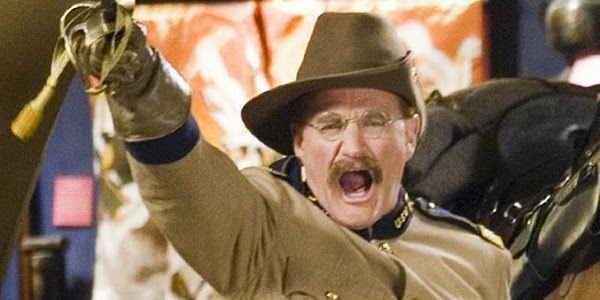
The thing that struck me, however, was seeing Robin Williams.  By now we all know that he committed suicide earlier this year.  This film was his last on-screen role.  He plays the reincarnated Teddy Roosevelt and when Teddy gives his farewell lines it feels like Williams himself signing off.

I don't want to stand in judgment on why Robin Williams ended his own life, but his passing provides a good thought for each of us to consider as the New Year approaches.

It may be cliche, but people tend to make New Year's resolutions.  This year think of Robin Williams when you consider what you want.  He seemed to have all that many of us want: popularity, praise, admiration, adoration, money, possessions, an amazing career, and more...and yet his life ended as it did.

Again, there were surely many complicated factors leading to his death, but my point is this: the things we all fantasize about having are not enough to truly bring you wholeness.  There's nothing inherently bad about them; they can be very good things.

But there are better things.

Things for the soul.

As 2015 approaches, ask yourself and Jesus, what do I want for my soul this year?  I know most of my readers are teens or young adults.  There's so much else to focus on, and that's okay, but spend some time considering how to develop your soul, for all the other things in your life will be benefited by it.

So, what could you do this year to nourish your soul?
What habits could you create to draw you closer to your Father?

What bad beliefs keep you stuck in unnecessary guilt or anxiety?
What would help you live with greater peace?
What would help you live with more passion?
What hurts need to be healed?
What life-giving relationships can you develop?
What keeps you from letting yourself be loved by God?
What values do you want to see grow in your life?
What wrongs do you need to make right?
Who have you hurt and how can you make it right?

Those are just a few things to turn your mind toward the inner life.

Happy, meaningful New Year 2015.


Wednesday, October 22, 2014

The Vow

This is an article by Kathy L. Gilbert about the real couple that is portrayed in the movie, The Vow.  The original article is here: http://www.umc.org/news-and-media/the-vow-a-real-love-story-of-faith

How seriously do you take the vow, "till death do us part?"

If you look at the statistics - half of all first-time marriages end in divorce - it seems not too many people say "I do" forever.

The Vow, a movie based on Kim and Krickitt Carpenter's story, debuted Feb. 10 and was the top movie of the weekend, making $41.7 million. However, the romantic movie is not even close to telling the true story of faith and commitment that has kept the Carpenters devoted to each other for 20 years.

Their saga began 10 weeks after their wedding on Sept. 18, 1993. They were in a serious automobile accident that left Krickitt with no memories of her husband or their new marriage. She suffered a severe brain trauma that wiped out 18 months of her life - the entire time she and Kim met, dated and married.

While he was still madly in love with her, he was a stranger she wanted nothing to do with.  The glue that kept them together was their faith in Christ and the promise they had made before God.

The Carpenters attend First United Methodist Church in Farmington, N.M. "Both of us know unconditionally we would not have made it through this ordeal without the Lord being in the center of it all," Kim Carpenter told United Methodist News Service.

Krickitt spent months in a coma and then months more in physical therapy, but she has never regained those 18 months of memory. Her recovery was slow, her personality changed and at times she told Kim she hated him.

"At a low point in my life, I didn't think this marriage was going to work. I didn't have the faith that we were going to make it," Kim said. "At the same time, I wasn't going to leave her in the state she was in; I was vowing to stay with her."


 Story gets out

The media first learned of their story when a reporter came to interview Kim about his work as a
baseball coach. In the course of the conversation, the story came out.
When the Carpenters renewed their vows and had a second wedding in 1996, it was a media circus. People were amazed and encouraged by their story, so Krickitt asked God to use their story to show others his amazing love and power.

They wrote a book about their story in 2000 and updated the book to coincide with the opening of the movie on Feb. 10.

"We enjoyed the movie but we were a little frustrated by the artistic license they took," Kim said. "The dramatization in the movie was much greater, but it is hard to put 20 years of challenges into 103 minutes."

Enduring faith

Krickitt's faith never faltered, and she never considered divorce.

"A Scripture I really hold onto is Philippians 4:13: 'I can do all things through him who strengthens me.' I believed I was called according to God's purpose, and I followed with my whole heart," she said.

Kim said he has taken offense to some of the media reporting him as "heroic, courageous, manly."
They insist they are an ordinary couple with two children, Danny and LeeAnn.

"It is amazing we live in a world that there is such a big deal made about a man and woman who simply did what we said we were going to do," Kim said.

The book and the movie are providing a platform for them to talk about their faith.

"People all over the world are seeking something higher, some message," Kim said. "We have been
very grateful for the prayers and well wishes we have received. We know the Lord is not going to give us more than we can handle."

*Gilbert is a multimedia reporter for the young adult content team at United Methodist Communications, Nashville, Tenn.

Sunday, August 10, 2014

Maleficent: Men are bad!

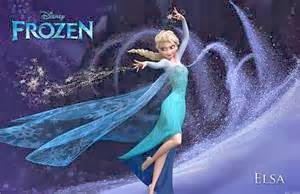
Maleficent.  Frozen.  Watch out, girls.  Men are bad!

I'm not that cynical to think Disney intends that message, but if you look at both movies they sure do seems to crack on men.

In Frozen, Hans sweeps Anna off her feet and gets her to enthusiastically agree to marry him, only to later find out that he planned to kill her off all along and get the throne.

In Maleficent, it gets worse.  With the exception of the crow every man (human at least) in the story is either evil or useless.  Maleficent's childhood crush turns into a bloodthirsty, insane killer and Aurora's Prince Charming turns out to be a hormone-driven waste of time.

In both movies, other women save the day; Elsa in Frozen, and in Maleficent, her fairy godmothers, and Maleficent herself.
There are good men out there.  Certainly Kristoff is an example.  Even Prince Charming seems to have some hope of being worth his screen time when he is shown with Aurora at the end of the film.
But there is a message worth catching: classic dating is worth it.

What do I mean by classic dating?  I mean the way I hear it was before my time.  Yes, before the 1980s. Actually, I don't know when it changed, but there was a time when you could be dating someone, but that didn't mean you were an "item."  It wasn't uncommon for people to be dating several others at a time.  It meant you were interested and going on dates, but not "steady" as the old term goes.  My point is that we need to get to know people better before we get too involved.  Heck, yeah, he wants to kiss you.  You're pretty and it's a great feeling to have someone of the opposite sex notice!  But, like Prince Charming, that may be all there is inside of him.  It goes the other way too.  A girl may seem like the prettiest thing on the face of the earth and you might assume that means she's sweet too.  Yet, you might find out that she's vindictive and unforgiving.

Dating is different now, I know.  But it's worth getting to know someone more before you get too far in.  You may not end up with killers like Hans or Stefan, but there are plenty of other emotionally dangerous traits out there that can wreak just as much havoc.

Tuesday, June 24, 2014

Now You See Me movie

My wife and I just watched Now You See Me.  What a great movie!  If you're looking for a fun and
suspenseful thriller check this one out about four professional magicians who are drawn together by a mysterious man in order to pull off the most incredible and money-garnering 'tricks' ever done on stage.

As I watched I was thinking about this reality: people like to dabble in faith and belief as long as it has to do with hokey stuff.  We get all tingly about "believing in what you can't see" when it has to do with hocus-pocus.

Why do we feel so much less interested when it's not dark, or when it's not a cute, old crystal ball-reading lady like in The Princess and the Frog?

I could be crabby and say what a lot of religious folk do: it's because we don't want the demands and expectations that come with believing in a God that expects things of us.  Maybe that's true.  I don't know.  Something tells me the above can't be said unless you're feeling nicely self-righteous and wagging your finger like a Pharisee.

Maybe, instead, we get more queasy about the unknown because it might mean that Someone knows us in our ins and outs, our public and private selves.  I'm not talking about the creepy 'He's watching you, so watch out' stuff (that sounds a bit too much like Santa Claus with fangs).  I mean the fear we all have of being truly known.  Honestly, we're afraid and ashamed of the real us.  If the unseen God is allowed to be real and allowed to know us truly, we'll have to deal with the sting of fear-fear that He will reject us, or be disgusted, or find us so much less than we ought to be.

Or...

what if He was...safe.  What if we could open up our guts to him like breaking a huge dam and letting out all the crap and laying it bare.  What if, instead of doing all that work to keep up the facade and hiding, we stopped and listened and heard God say, "Come to me, you who are weary and burdened, and I'll give you rest" (Matthew 11).

Wednesday, February 5, 2014

Why I Like Sad Movies

I like funny movies the same as the next guy.  But I've got a thing for watching "heavy" movies.  I leave movies like Talladega Nights with a lighter heart and tired cheeks, but I leave movies like Les Miserables, Sunshine Cleaning, or Invictus somehow different.

I used to be a guy that was so big about the rules.  Now, don't get me wrong.  It wasn't all about being nice or being a teacher's pet.  Instead, when I really began following Christ with all my heart, I saw the wisdom in God's ways, as I perceived them, and was proud to live and promote them.  But, they eventually just became more about living rules instead of understanding God's heart.

Then I'd see movies where love had to break rules.  I'm not just talking about romantic love, but love for those who suffer.  Like Les Mis where a girl who is pregnant out of wedlock is desperate for help or in Sunshine Cleaning where the main character is convinced that the best she can do to not be lonely is to carry on an affair with a married man who has no commitment to her.  Then there's Henry Poole Is Here where a man argues vehemently against belief in God, but we find out later that he has a terminal illness that has crushed his hope.

These are all people who did wrong, "unrighteous" things.  Christians are supposed to fight these, argue against these, and vote to stop these...aren't they?  It's no wonder the religious world couldn't appreciate Jesus.  All kinds of sexual deviants, swindlers, and uneducated dopes seemed to pull toward him like old magnets on a fridge.

Somehow, he must have been able to see their souls, their stories, their sufferings.  We mostly sin to
fill a void, an emptiness, and Jesus could see it.  Lives were changed, but not by rules, by love.  Love has a way of calling out the true, noble "us" that is often buried beneath our coping mechanisms.

That perspective, Jesus', is the one that sad movies sometimes give me.  

Elizabeth O'Connor, an author, said that, "We each carry within us the image of God the Creator; we each have the task of making the earth into a fairer, kinder place.  The first step is imagining a better world, and that is most apt to happen when we suffer or look on suffering."


Friday, January 31, 2014

Be a Christian, break a law


What do both Jean Valjean and Tori Smith have in common?  They broke laws.  Valjean is the main character in Les Mis that we’re watching in class (or in the musical film that came out last at Christmas).  Tori Smith’s story was the article that some of you read in class about how she loved her husband after he lost his legs in Afghanistan serving in the military.

Valjean breaks the law left and right.  He doesn’t agree with Javert, the police authority, when he arrests Fantine.  He evades arrest when Valjean’s true identity is revealed.  He sneaks into the city of Paris and hides from the law.  The list could go on. 
When Tori’s husband is brought back in critical condition from Afghanistan and put in a hospital, she is told that she is not allowed to remain in the room.  She refuses to leave.  She breaks the laws of that hospital.

Why did they do these things?  Because they loved.  Valjean understood what it was like to be unfairly treated so he stood up and cared for Fantine.  His heart went out to the orphan Cosette so much that he evaded arrest in order to protect her.  Tori refused to follow hospital laws because love for her husband, and desire to be at his side at his toughest hour, was greater than her willingness to follow rules. 

I especially love Tori’s story because she breaks the social laws that we all feel.  You know the unwritten rules that people around us have.  Things that would have told someone like Tori: you deserve better.  Your husband can’t bring you happiness as a cripple.  It’s okay to move on.  All her actions cry out a decisive: NO!  I love him. 
I know all of you in your teen life feel these unwritten rules around you.  I feel them as an adult too.  But I want to choose love over ‘saving face.’  I know it’s hard and I don’t always come through either.  I remember when I was in high school that there were some people that I became friends with that weren’t the popular people.  The unwritten laws say, “Choose friends that get you places.”  But as God got ahold of my heart I wanted to love, to reach out to people who were open, people who were in touch with their needs.  So, I learned to love and ignore the rules of the ‘world’ around me. 

But let me say, there have been many times that I have not loved.  I admire my wife so much because she is so quick to reach out to people, even people she doesn’t know.  Doing that is often hard for me.  Sometimes I feel silly or weird, but she inspires me to push myself. 
So, let’s be social law breakers, eh?  Oddly enough there’s someone else who did this a whole lot.  It was a guy who lived in Galilee.  Law breakers are in good company.

Sunday, January 19, 2014

Frozen & Mr. Banks

When I first became a Jesus follower in high school I was amazed at the depth of wisdom about life that I found in Scripture, and all things "Christian."  I quickly assumed there was no wisdom elsewhere, that God could be heard only through the voices of His followers (and, of course, His followers that agreed with my perspectives). 

And then there was Paolo Coehlo.

I began to devour nearly everything this mystical novelist published.  Here's the weird part: God met me in deep, profound ways when I read Coehlo's books, ways that still affect me today.  I began to see that the voice of my Father could be heard all around me and often I can tell when it's Him.

I recently saw two movies that touched me, and made it hard for me, in my manliness, to hide the fact that I was tearing up.

The first was Frozen.


Yes, my world of five girls makes Disney movies part of my life's fabric.  Because the young princess Elsa has a confusing power to freeze things, her parents are forced to keep her isolated from everyone, including her sister Anna, with whom she once was very close. 

Neither Anna's parents, nor Elsa herself, ever explained to her why her sister had to be kept apart.  This is the part that moved me: Anna, instead of writing off her sister because of her coldness, fights for, and ultimately sacrifices what she longs for, for their love.  In the climax of the film, she has the chance to get the guy she loves to kiss her and save her, but she chooses to give up that chance so her sister can live. 

How many times have I written people off because I didn't understand them, because I didn't know their story?  How many times have I looked down on people for something without considering that it may have been great pain that is the cause. 

This leads to the other movie: Saving Mr. Banks.  It's the story of the woman who wrote Mary Poppins.  The movie consists of many flashbacks to her childhood where she recalls the father that she loved so dearly, but who was painfully addicted to alcohol. 

Here is a woman with a past, a story that explains a great deal about how she is as an adult.  It struck me just how much of a legacy her father left on her.  It was indeed a legacy, though, a legacy of shame, guilt, and sadness. 

None of us can leave a perfect legacy, but, oh God, let us strive to leave an
honest, good one.  I can think of it now with my kids, but for you guys you are leaving legacies too to your siblings, your family, your friends, your boyfriend or girlfriend, and your classmates.  No one really hides their light under a bushel.  The question is what kind of light are you giving off?


Wisdom comes in my surprising places.  This time it was the movie theater.

Wednesday, November 6, 2013

Heaven is fairy tale?


Hazel Grace, the sweet, terminally ill girl that has found love from The Fault in Our Stars. I want so much to like her. I want so much to find her inspiring.

But she angers me.

I should feel bad about that. I mean she's dying. But she claims she doesn't want pity.

Here is just one example of many that frustrate me:

Hazel loves this one book. Her dad read it and says,

"It was a bit hopeless," he said. "A bit defeatist."

"If by defeatist you mean honest, then I agree."

"I don't think defeatism is honest," Dad answered. "I refuse to accept that."

"So everything happens for a reason and we'll all go live in the clouds and play harps and live in mansions?"
 
I come across this thinking so frequently: if you really want something to be true, it must not be. Because you really wish there was a God, because you really long for there to be an afterlife, it must not be. Some atheists pride themselves on being so honest, so in touch with the facts and reality.

Theirs is just another wishful-thinking mode too, though they don't admit it.   Some very much hope there is no God or no afterlife. Alas, that may require them to recognize some responsibility towards that God or that how they live their life now may have some effect on the next life.

The "honesty" argument falls in so many places. I love my wife. But one could say, "Hey let's be honest. We are all competing organisms. My survival is my main goal. I am an evolutionary product with no inherent meaning. I am a blob of stellar material that has come to life and all I can do is maintain my miserable existence. So, I will choose to protect myself and serve myself at whatever cost it takes."

And I can say, "I'm just being honest."

But, here's my problem: I believe in love. Yes, I really, really want there to be a thing called love. I want it to be true that giving of myself not only blesses my wife, but also blesses my God. I want it to be true that all the love and relationships that I have built with her and my four little girls will have meaning both in this life and the next. Yes, I believe in love. Call me dishonest, if you must.

I give Hazel's dad credit that he tries to hold onto some semblance of belief, though the best he can come up with is, "I think the universe is improbably biased toward consciousness, that it rewards intelligence in part because the universe enjoys its elegance being observed."

He seems to be trying so hard to avoid saying there is a Being who actually cares. Maybe he's afraid of being 'honest.'

God (truly), I hope Hazel gets honest by the end of this book. But maybe because I really want that to happen, because I actually care enough about this fictional character to hope she finds real meaning, that must mean I believe that everything happens for a reason and we'll all go live in the clouds and play harps and live in mansions*" Honestly, I suppose I do...minus the harps, of course.


*To be exact, no I don't believe everything happens for a reason, though I do believe that God can bring meaning and life out of even the greatest tragedies.  The clouds, harps, and mansions are simply a cartoon cutout of a real belief in a life that will happen after this one that will certainly be much more meaningful than comic strip versions of heaven.